
warehouse automation trends 2026 are no longer about whether a 3PL should automate; they are about which tools improve service without adding unnecessary complexity. For buyers in the United States and Canada, smart warehousing now sits in the same conversation as space, labor, and throughput because customers expect faster picks, fewer errors, and clearer shipment status at every step.
The practical question is not whether automation sounds advanced, but whether it supports speed, accuracy, visibility, and labor efficiency in day-to-day operations. That means evaluating warehouse technology trends through real workflows: receiving, slotting, replenishment, picking, packing, and exception handling. A system only matters if it helps operators move work faster, reduce rework, and make decisions with cleaner data.
For 3PL buyers, the challenge is to separate useful 3PL automation from hype. This section focuses on the operational questions that matter in 2026: what to ask, what to measure, and how to judge whether a technology fits your facility, your labor model, and your customer requirements.
warehouse automation trends 2026: what matters most for 3PL operations
In 2026, the most useful warehouse automation trends 2026 are not defined by flashy equipment; they are defined by software-led control, better visibility, and fewer manual touches in daily workflows. For 3PLs, that means automation should connect the WMS and WES so work can be released, prioritized, and rebalanced in real time as orders change. When those systems are aligned, supervisors spend less time chasing status updates and more time keeping dock, storage, and fulfillment activity moving.
Practical warehouse technology trends center on task prioritization, smarter putaway, directed picking, and exception handling that keeps associates productive when inventory data, labor plans, or customer rules shift. This kind of smart warehousing supports the floor without forcing a full redesign of the building. It also helps reduce repetitive decisions that create friction for teams, which can improve service levels and make daily execution more consistent across shifts.
For buyers, the key test is whether the platform can flex with changing volumes, customer mix, and seasonal demand without creating new bottlenecks. A strong 3PL automation plan should allow labor to be re-sequenced quickly, support wave and waveless work, and give managers clear visibility into backlog, slotting pressure, and order exceptions. That flexibility matters in both the United States and Canada, where peak periods and customer requirements can change quickly. When evaluating warehousing technology, ask how the system improves throughput, reduces manual handoffs, and helps teams recover faster when demand spikes.
smart warehousing and visibility: the new baseline for buyers
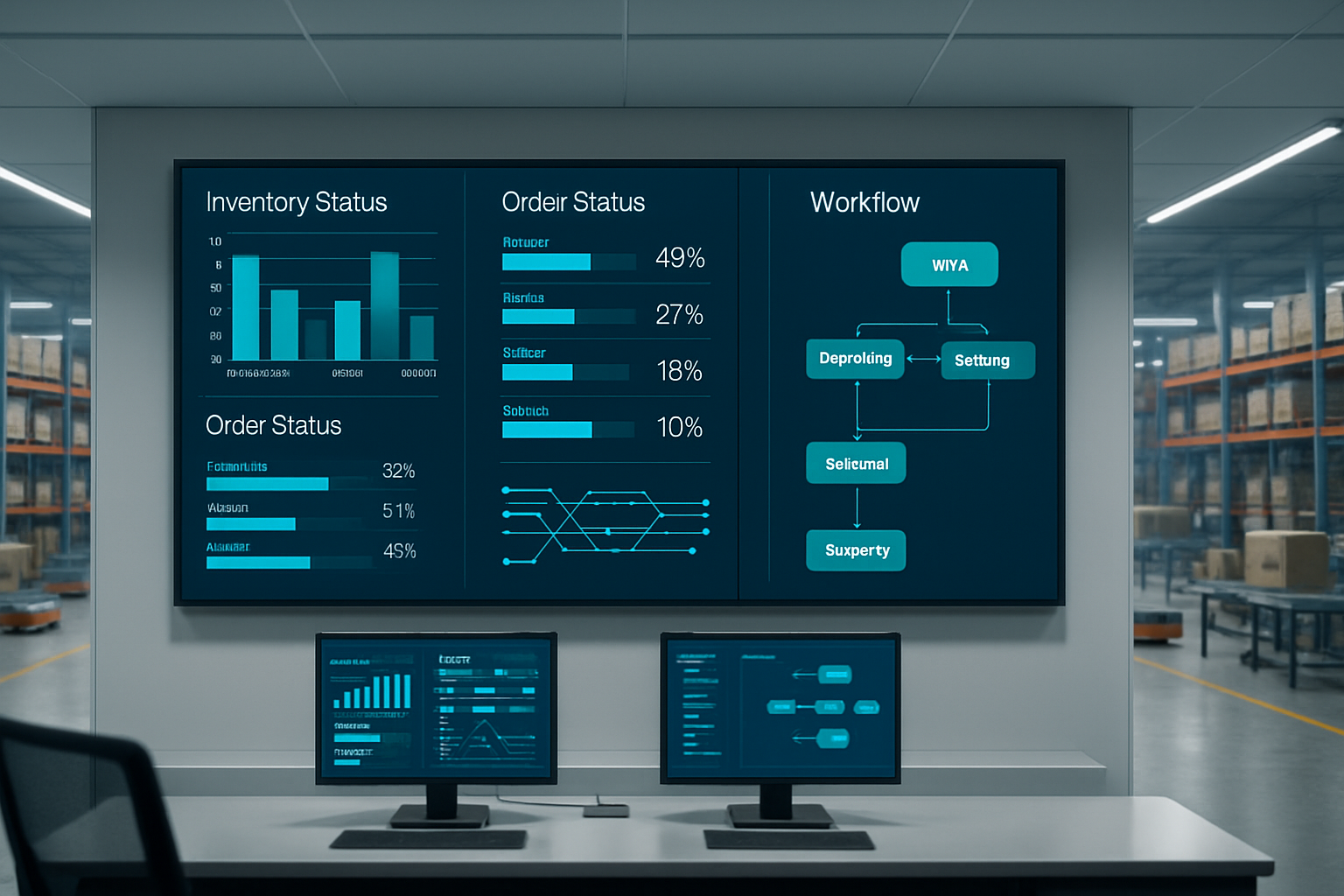
For buyers evaluating warehouse automation trends 2026, smart warehousing is no longer a niche add-on; it is the connected operating model that ties WMS activity, labor tasks, and inventory movement into one view. In practical terms, it means real-time data, scan-driven transactions, and actionable alerts that tell teams what changed, where it changed, and what needs attention now.
That visibility improves inventory accuracy by reducing blind spots between receiving, putaway, replenishment, and pick. It also gives operators better slotting insight, so fast movers can be placed where they are easier to reach and slower movers do not consume premium space. During order fulfillment, buyers should expect clear order status visibility across the process, not just a shipment confirmation at the end. If a fulfillment step is delayed, the system should surface it early enough for the team to intervene.
The real operational value is exceptions management. Smart warehousing tools should flag mismatched counts, missed scans, queue buildups, and aging exceptions before they become customer-facing problems. Faster issue resolution reduces rework, supports better labor planning, and helps supervisors assign the right task to the right person without waiting for manual reporting.
For 3PL buyers, this level of visibility supports clearer customer communication and fewer operational surprises. It also reflects the direction of warehouse technology trends: systems that make work easier to see, easier to measure, and easier to correct while improving labor efficiency across the building.
3PL automation that supports labor efficiency without overengineering
In warehouse automation trends 2026, the most useful 3PL automation is not the most complex; it is the kind that cuts wasted motion and makes labor easier to manage across mixed-client operations. For U.S. and Canadian 3PLs, that usually means practical tools such as pick support, scan verification, voice-directed workflows, cartonization logic, and sortation coordination. These tools help associates spend less time walking, searching, and reworking orders, which is where labor cost and service misses often build up.
The best deployments fit the realities of smart warehousing environments with frequent SKU changes, varied customer rules, and shifting volume. A voice or scan tasking layer can guide pickers through optimized routes, while cartonization helps reduce repacks and extra handling. Sortation coordination can keep outbound flow balanced without forcing a full redesign of the building. In each case, the goal is the same: use warehouse technology trends to remove friction, not to add another system that staff must babysit.
Buyers should evaluate how much training each tool requires, how often it will be used, and what happens when an exception appears. Ask whether the process is maintainable by site supervisors, whether uptime depends on a specialist, and how quickly the operation can fall back to manual work if a device or interface fails. In multi-client 3PL environments, the right automation is configurable, easy to support, and able to change with customer mix without heavy reengineering.
- Reduce walking by using task logic that shortens travel paths and batches work intelligently.
- Reduce searching with scan verification and clearer location control.
- Reduce rework with cartonization and picking rules that match customer requirements.
- Check training load, uptime expectations, and maintenance ownership before rollout.
That practical lens is what separates durable warehouse automation trends 2026 from expensive overengineering. The winning systems make labor more efficient while keeping the operation adaptable, visible, and manageable.
how to evaluate warehouse technology trends before you commit
When comparing warehouse technology trends, start with fit, not feature count. A strong platform should connect cleanly with your WMS, ERP, TMS, and carrier systems so order status, inventory records, dock schedules, and shipment updates stay aligned without duplicate entry or manual reconciliation. If the vendor cannot explain the integration path, exception handling, and data ownership across systems, the deployment risk is higher than the demo suggests.
For warehouse automation trends 2026, buyers should also test the operating model. Ask how the solution scales across locations, shift patterns, and volume swings in the United States and Canada, and whether support is provided through in-house specialists, managed services, or partner channels. Total cost of ownership should include implementation, training, upgrades, maintenance, reporting configuration, and the labor needed to sustain it after go-live.
Security and control matter just as much as speed. Review user permissions, audit logs, data retention, and whether reporting can show service levels, backlog, exception causes, and labor productivity in a way supervisors can act on quickly. Change management should cover role-based training, process documentation, and escalation paths so teams can adapt without losing service consistency. The best automation improves order accuracy, visibility, and dock-to-door reliability—not just the time it takes to complete a task.
- Confirm integrations with WMS, ERP, TMS, and carrier tools before signing.
- Ask for a full TCO view, including support, training, and ongoing configuration.
- Verify security controls, reporting access, and audit readiness.
- Measure service outcomes such as accuracy, visibility, and exception reduction.
practical checklist for 2026 warehouse automation buyers
For U.S. and Canada 3PL teams evaluating smart warehousing options, the best conversations stay grounded in current operations, not robotics hype. Use this checklist to compare 3PL automation proposals against your actual labor model, order profile, and service commitments across warehousing and fulfillment workflows.
start with the current state
- What are the biggest process pain points today: receiving delays, putaway mismatches, picking errors, cycle count gaps, dock congestion, or slow exception resolution?
- Where does data break down between WMS, labor management, scan devices, and customer reporting?
- Which tasks are most dependent on manual rework, tribal knowledge, or supervisor intervention?
test for operational fit
- Which warehouse technology trends does the solution support now, and which require custom work or a later phase?
- How does the system handle throughput at peak, order accuracy, inventory visibility, and exception handling without creating new manual steps?
- What integrations are native, what needs middleware, and who owns testing, mapping, and go-live support?
check labor and deployment readiness
- Does the design reduce walking, touches, and training time for seasonal labor and multi-shift teams?
- What is the deployment timeline by site, and what temporary process will operate during cutover?
- How will supervisors monitor adoption, retrain users, and support bilingual teams where needed in the U.S. and Canada?
prioritize by business value
- Must-have: accuracy, visibility, core integrations, and a stable peak plan.
- Nice-to-have: advanced dashboards, optimized slotting, and expanded labor analytics.
- Later phase: add-ons that depend on proven volume, clean data, and stable exception workflows.
The strongest warehouse automation trends 2026 proposals are the ones that improve control, not just equipment count. Ask vendors to show how their system fits your data quality, labor constraints, and service levels before you commit to a rollout schedule.
For teams planning around warehouse automation trends 2026, the next step is to turn the strategy into a specific operating model. contact Newl Group to review lanes, warehouses, and service requirements.
Frequently Asked Questions
What does warehouse automation trends 2026 mean in practice?
It means warehouse automation trends 2026 should be treated as a real operating plan rather than a generic topic. Teams should connect the service design to warehouse flow, routing, and inventory expectations.
How should teams choose a service approach?
Start with the bottleneck, then match the service mix to the lanes, warehouse capacity, and customer needs you actually have.
What matters most in execution?
The most useful plans are the ones that translate into ownership, timing, and service boundaries people can execute.
For teams planning around warehouse automation trends 2026, the next step is to turn the strategy into a specific operating model. contact Newl Group to review lanes, warehouses, and service requirements. That keeps the advice tied to execution instead of theory.